
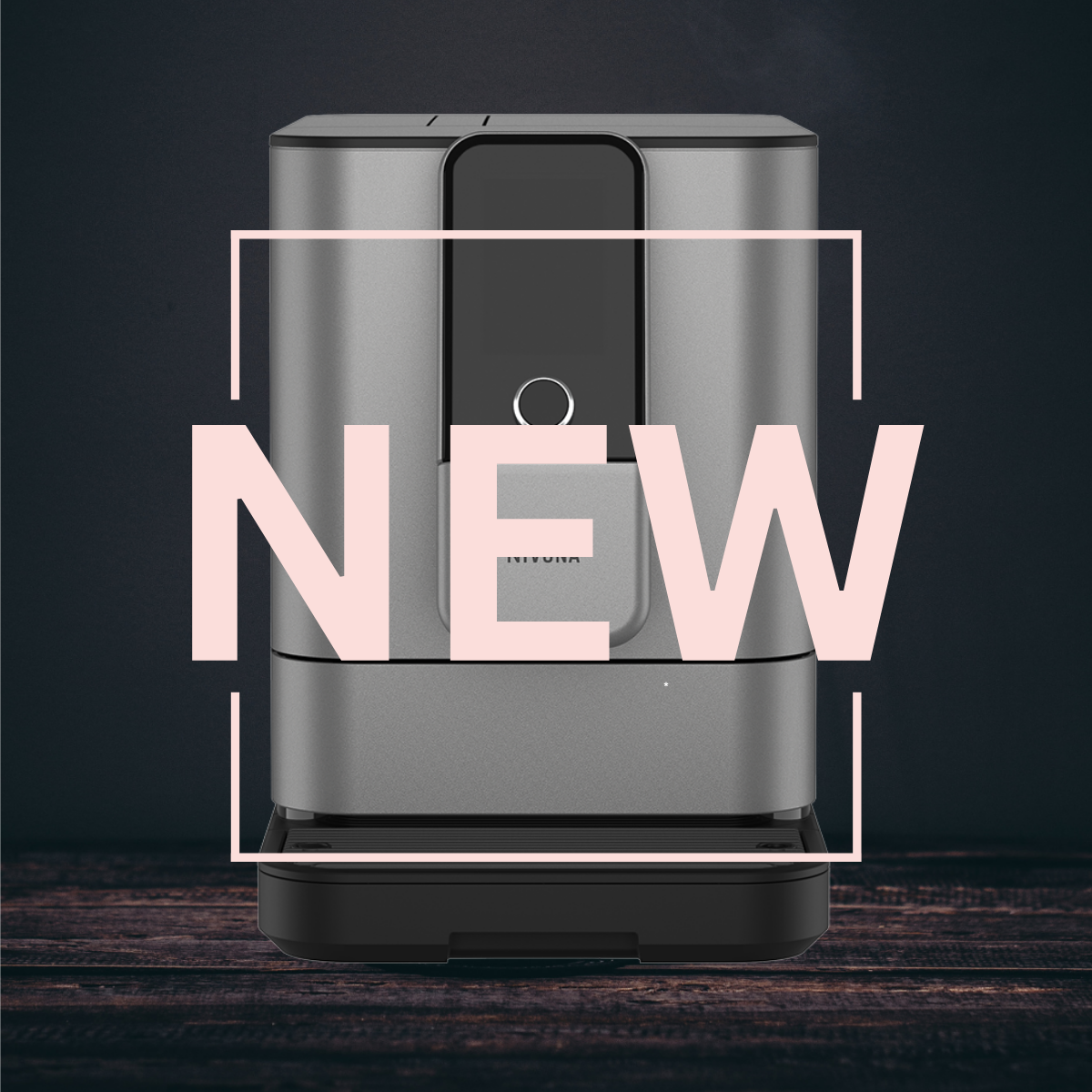



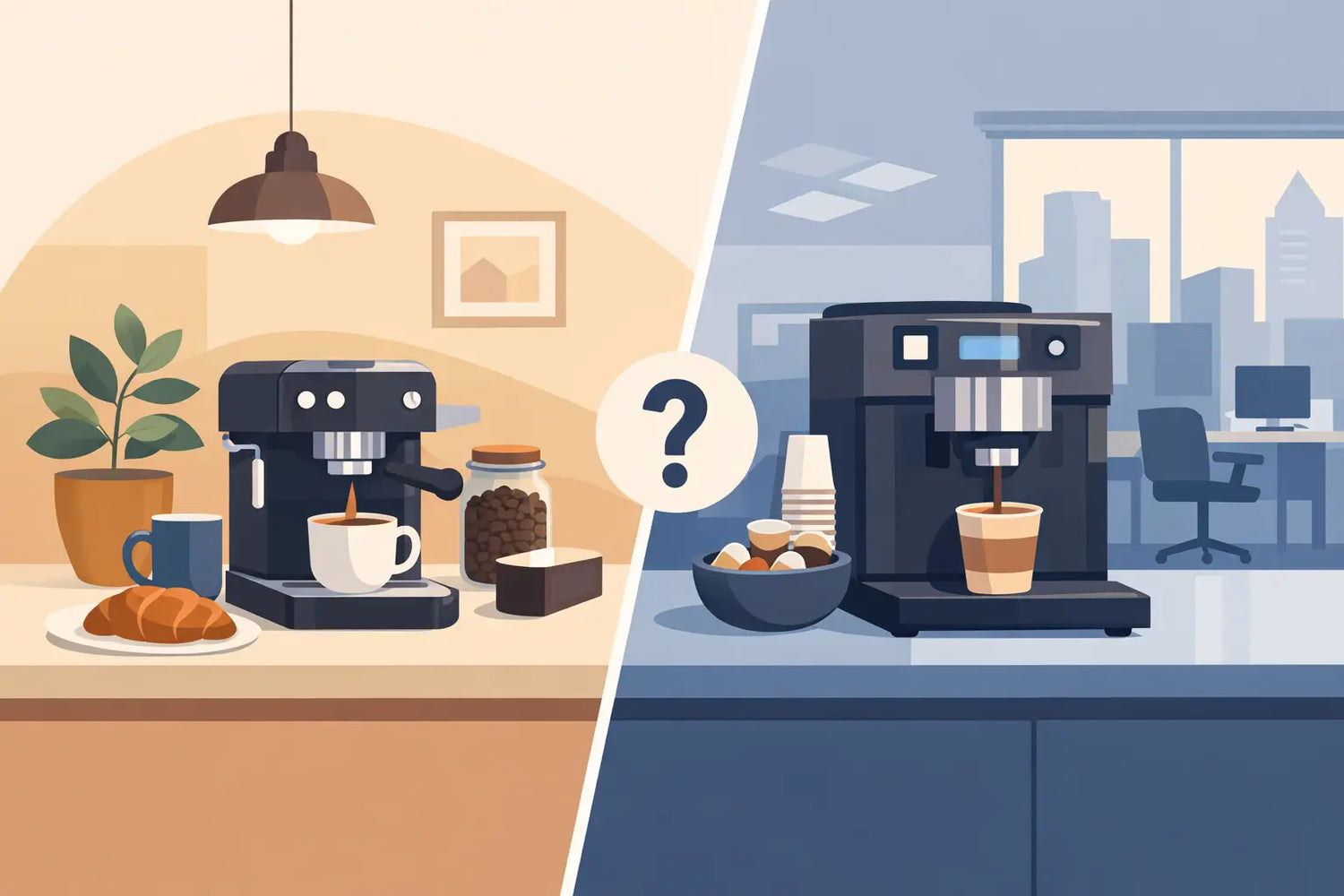
The difference between a home coffee machine vs office setup shows up fast - usually around 8:15 a.m., when one person wants a quiet cappuccino and six coworkers are already waiting for their second cup. Both environments want great coffee with less effort, but the demands are not the same. The right machine is less about where it sits and more about how many people use it, how often they use it, and how much maintenance anyone is realistically willing to handle.
Home coffee machine vs office: the real difference
At home, coffee is personal. One person likes a stronger espresso, another wants a larger morning cup, and someone else only cares that milk drinks come out smooth and hot without a complicated routine. A home machine has to fit daily habits, kitchen space, and a budget that usually comes from one household.
In an office, coffee becomes a shared utility. Speed matters more. Consistency matters more. Durability matters more. A machine in a workplace may prepare dozens of drinks in a day, often for people with different preferences and very little patience for manual steps. That changes what counts as good value.
This is why the best home machine is not always the best office machine, even when both are bean-to-cup models. The pressure on the machine, the cleaning demands, and the expectation of convenience all increase in a shared setting.
What matters most at home
For home buyers, the machine has to earn its place every day. That usually means better coffee than pods or basic drip, without turning breakfast into a technical project. A fully automatic machine works well here because it gives you espresso, americano-style coffee, and milk-based drinks from fresh beans with far less effort than manual equipment.
Ease of ownership tends to matter more than people expect. Many buyers focus first on drink options, but long-term satisfaction often comes from the small things: simple controls, adjustable coffee volume, a grinder that performs consistently, and cleaning programs that do not feel like a chore. A removable brewing unit is especially useful in a home environment because it makes regular rinsing straightforward and keeps maintenance less intimidating.
Noise and size also matter more at home than in an office. A machine can be excellent on paper and still feel wrong if it dominates the counter or wakes the household early every morning. For many households, the ideal machine balances premium coffee quality with a footprint and workflow that feel easy to live with.
There is also the question of variety. At home, a machine may need to satisfy two to four regular users with very different habits. The ability to adjust strength, temperature, and cup size is not just a nice extra - it is what stops one machine from becoming a compromise.
What matters most in an office
An office machine has a different job. It is not there for one perfect cup made slowly. It is there to keep coffee moving, reduce interruptions, and avoid becoming the appliance everyone complains about by Thursday.
Capacity becomes the first major issue. Water tanks, bean containers, and drip trays fill or empty faster in a workplace. If the machine requires frequent refilling or emptying, someone has to notice and handle it. In a small office, that may be manageable. In a busier space, it quickly becomes friction.
Then there is drink throughput. An office machine should be able to prepare back-to-back cups without struggling. Features like two-cup preparation can make a real difference when several people are waiting. Stable grinder performance and reliable brewing temperature also matter more in offices because inconsistency becomes obvious when many people use the machine every day.
Maintenance is where office use often exposes weak choices. Automatic cleaning and descaling programs are not just convenient in a shared environment - they help protect the machine from neglect. Offices rarely have a coffee enthusiast standing by to manage care routines. The better solution is a machine designed to make upkeep simple, guided, and hard to ignore.
Why bean-to-cup often wins in both settings
For both home and office use, bean-to-cup machines sit in a strong middle ground. They deliver fresh coffee from whole beans, avoid the waste and limited flavor range of capsules, and remove much of the complexity of manual espresso machines. That makes them a practical premium option.
At home, this means café-style drinks without barista training. In an office, it means better coffee for more people with less hands-on effort. The appeal is not only taste. It is the combination of quality, speed, and straightforward operation.
That said, "easy" has to be real. If milk systems are awkward to clean, if menus are confusing, or if regular care feels technical, people stop using features properly. A good bean-to-cup machine should make premium coffee feel routine rather than demanding.
Choosing by usage, not by location alone
The smartest way to compare home coffee machine vs office needs is to look at actual use patterns. A quiet household of two may need a very different machine than a family of five with frequent guests. A small office with six employees has different demands than a client-facing workspace where coffee is served all day.
If daily volume is low to moderate, a compact fully automatic machine with adjustable drink settings may be enough, even in a small office. If usage is high, stepping up to a machine built for more frequent preparation is the better long-term decision. Buying too small saves money once and creates frustration every day after that.
Milk drinks are another dividing line. In some homes, cappuccinos and flat whites are central to the buying decision. In some offices, milk drinks are popular but no one wants to clean a complicated system. That is where easy-rinse milk solutions and guided cleaning programs become more than feature headlines. They directly affect whether the machine stays pleasant to own.
Cost is more than the price tag
A cheaper machine can become expensive if it underperforms, breaks under workload, or creates constant maintenance headaches. When buyers compare options, the upfront cost is only one part of ownership.
At home, long-term value often comes from consistent cup quality, durable components, and lower dependency on coffee shop visits or capsules. In an office, value includes reliability, staff satisfaction, and the time saved when coffee preparation and upkeep are simple.
This is where premium-accessible machines stand out. You are not only paying for coffee output. You are paying for easier daily use, automatic care support, stronger internal components, and a machine that feels built for regular life rather than occasional novelty.
Features worth prioritizing
Whether the machine is for a kitchen or a workplace, a few features have a clear impact on ownership. A hardened steel conical grinder supports consistency and durability. Adjustable coffee volume helps different users get what they actually want. Automatic rinsing, cleaning, and descaling reduce maintenance friction. A removable brewing unit adds confidence because it allows direct cleaning of an important internal part.
For offices, larger capacity and two-cup preparation deserve extra attention. For homes, compact design and drink personalization may carry more weight. The right balance depends on your routine, but convenience features should never be treated as secondary. They are often what separates a machine that looks impressive from one that stays useful.
When one machine can serve both
Some buyers are not choosing strictly between home and office. They want one type of machine that can suit either a busy household or a small team. That is where well-designed fully automatic coffee machines are especially strong. If the machine combines reliable build quality, clear controls, automatic care programs, and enough drink flexibility, it can adapt well to both environments.
For buyers who want that balance, an official specialist such as My Nivona makes the decision easier because the range is already structured by usage level and comfort features, not just by price. That matters when you want premium coffee quality without overbuying or ending up with a machine that feels too limited after a few months.
A good coffee machine should feel natural in the space where it lives. If it fits the rhythm of your mornings or your workplace, people use it happily. If it fights that rhythm, even excellent coffee starts to feel inconvenient.
The better question is not whether a machine belongs at home or in an office. It is whether it can keep up with the people who depend on it every day.

Leave a comment
This site is protected by hCaptcha and the hCaptcha Privacy Policy and Terms of Service apply.