



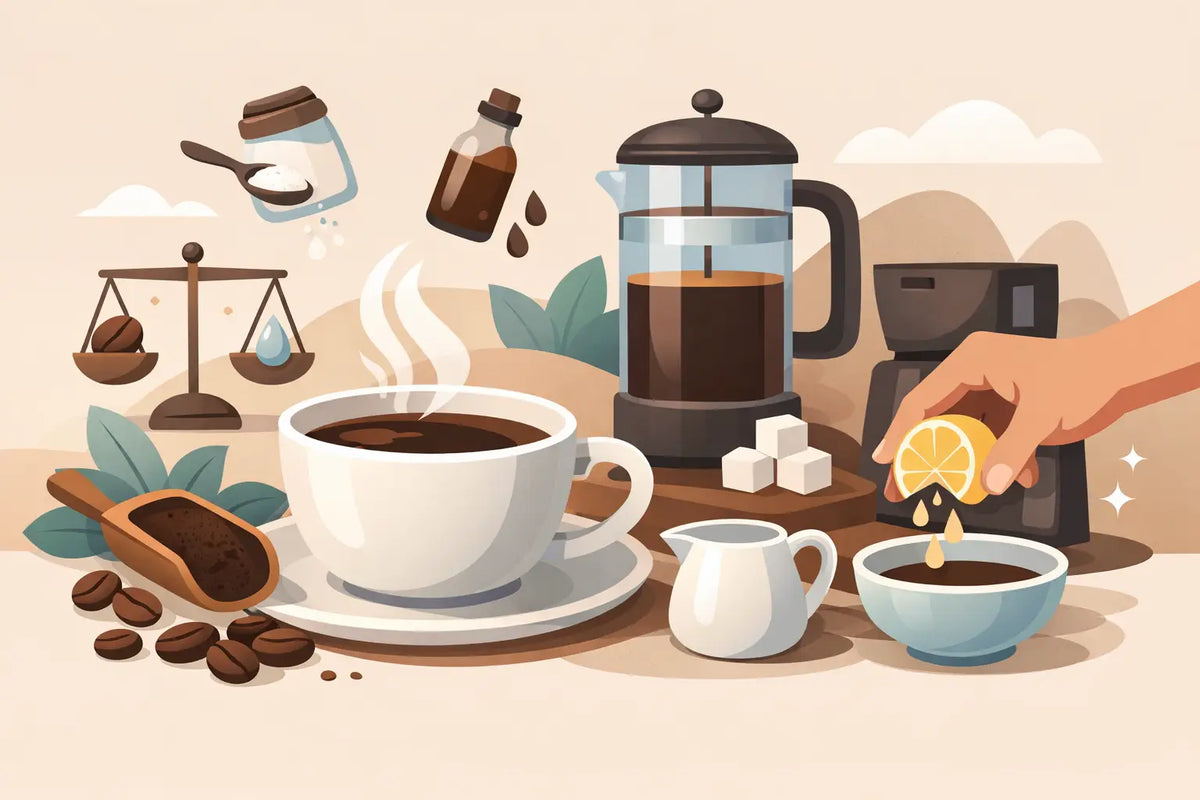
How to reduce coffee bitterness at home is mainly about understanding what causes bitterness and fixing small brewing issues before changing your entire coffee setup. In most cases, bitter coffee is not caused by the beans alone, but by grind size, water temperature, brew time, or machine cleanliness.
When learning how to at home, it helps to think of bitterness as an extraction problem. Coffee becomes bitter when too many harsh compounds are pulled out during brewing, usually due to over-extraction or unbalanced settings.
Why coffee becomes bitter
Bitterness appears when coffee is over-extracted. This means water stays in contact with coffee grounds for too long or flows too slowly. In how to reduce coffee bitterness at home, this is the most important concept to understand because it affects every brewing method.
Other causes include:
Water that is too hot
Grind size that is too fine
Stale or over-roasted beans
Dirty brewing equipment
Each of these can increase bitterness even if the coffee beans themselves are good quality.
How to reduce coffee bitterness at home with grind adjustments
One of the fastest ways to fix bitterness is adjusting grind size. A grind that is too fine slows down extraction and pulls more bitter compounds.
When applying how to at home, try making your grind slightly coarser and test the result over a few cups. Small adjustments often create noticeable improvements.
Consistency also matters. Uneven grinding can cause both over-extraction and under-extraction in the same cup, leading to unbalanced flavor.
Water temperature and brewing balance
Water that is too hot can quickly increase bitterness. The ideal brewing range is typically 90–96°C.
In how to reduce coffee bitterness at home, controlling temperature is especially important for darker roasts, which release bitter compounds more easily under high heat.
Choose better beans for smoother coffee
Bean choice plays a major role in bitterness. Very dark roasted beans often taste stronger but can also become harsh or smoky.
If you are focused on how to reduce coffee bitterness at home, medium roast beans are usually the safest option because they preserve sweetness and balance.
Freshness also matters. Old beans lose aroma and become more bitter and flat over time.
Brew time and cup size control
Longer brewing time increases bitterness because later extraction stages release harsher compounds.
To improve results in how to reduce coffee bitterness at home, reduce cup size slightly or shorten extraction time if your machine allows it. This alone often improves taste immediately.
Clean machines make smoother coffee
Old coffee oils and residue can create stale bitterness in every cup.
A key step in how to reduce coffee bitterness at home is regularly cleaning your machine, including the brew group, spouts, and internal pathways. Scale buildup can also affect temperature stability and increase bitterness over time.
Final practical fix
To quickly improve your coffee:
Use medium roast beans
Slightly coarser grind
Lower brew strength a little
Clean the machine regularly
Adjust cup size if needed
These simple steps for how to reduce coffee bitterness at home solve most bitterness issues without complicated changes.

Palikti komentarą
Ši svetainė apsaugota „hCaptcha“, taip pat taikoma „hCaptcha“ privatumo politika ir paslaugos teikimo sąlygos.